 Skip to main content
 PROJECTS
INFRABLUE was a project co-funded by the European Commission under the Creative Europe Programme. Its aim was to identify and elevate the existing blue infrastructures in the partner cities — Turin, Lisbon and Belgrade — highlighting them as natural, social and cultural assets with the potential to drive meaningful urban regeneration.
Blue infrastructures were understood as:
- Natural resources, essential for responding to the urgent need for ecological transition;
- Social resources, capable of bringing communities together;
- Cultural resources, contributing to identity-building and a sense of belonging.
These infrastructures could embody and promote the principles of sustainability and inclusion at the heart of the New European Bauhaus.
Here is a clearer, more fluid and professional version of the text, keeping the original meaning:
INFRABLUE aimed to enhance the urban relevance of these territories by first systematising knowledge about each site and deepening the understanding of their characteristics, resources and needs. In the second phase, the project supported their reactivation through small-scale interventions co-designed and co-produced with local communities and the creative sector.
Drawing on territorial analysis and dialogue with residents and everyday users of these infrastructures, the partners set up co-creation labs that engaged creative practitioners in producing original artworks to reinvigorate previously overlooked areas.
The entire process was documented in a film that captured these experiences and aimed to inspire other European cities to generate urban, social and cultural value by recognising and activating their natural resources.
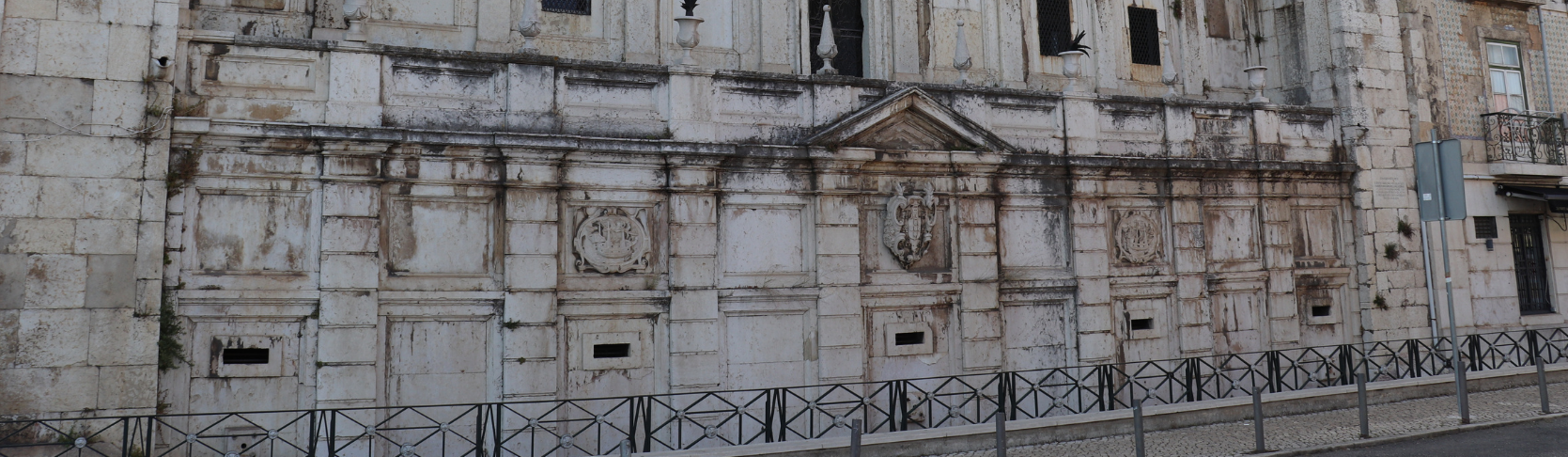
In Lisbon, the blue infrastructure under study was the “invisible waters” of the Castle Hill.
Since ancient times, Lisbon has been supplied by underground water from wells, springs and galleries, particularly in the Castle Hill area — the birthplace of the city and home to Alfama and Mouraria. Archaeological remains from the Roman period attest to the historical importance of these water systems. However, twentieth-century urbanisation profoundly reshaped the landscape, leading to the decline and abandonment of many of these infrastructures. Numerous wells and springs have been lost due to a lack of preservation, resulting in the disappearance of valuable cultural heritage and practices. Today, most of these resources remain hidden, and their interaction with the urban environment is poorly understood. With the rapid urban transformation taking place on the Castle Hill, it has become urgent to record the intangible cultural dimensions associated with these “invisible waters”.
Explore the artistic intervention Submerso – Discovering Lisbon’s Invisible Waters, developed within the project:
Artistic intervention webpage
Summary video of the artistic intervention
Videos from the interactive documentary with dedicated interviews
BlueInfrastructures – The Documentary